GP 374 Stenkyrka Tystebols I


mer grejer
0.0
| Plane | Position | Flip |

 |
||

 |
||

 |
| Show planes | Show edges |
Parish Find Location Stenkyrka
Find Location ʻNyängʼ near Tystebols gård in Stenkyrka parish.
Find Context Classification Private Property
Parish Present Location Bunge
Present Location Classification Bungemuseet
Coordinate Present Location (lat) 6419534
Coordinate Present Location (long) 738968
Material Limestone
Height 105
Width 57
Thickness 15
Lindqvist Type A (ca. 400-600)B (ca. 500-700)
Lindqvist Shape Dwarf stone
Context and Discovery “This stone was found in 1911 by the farmer C. O. Högberg in Nyäng, northeast of the farm, not far from the large grave field at Lillbjärs. It rested on the clay under the soil, with several stoned surrounding it, but without evidence of a burial” (Lindqvist 1941/42 II, p. 130). The stone has been re-erected in the open-air museum in Bunge where it is still standing in the open.
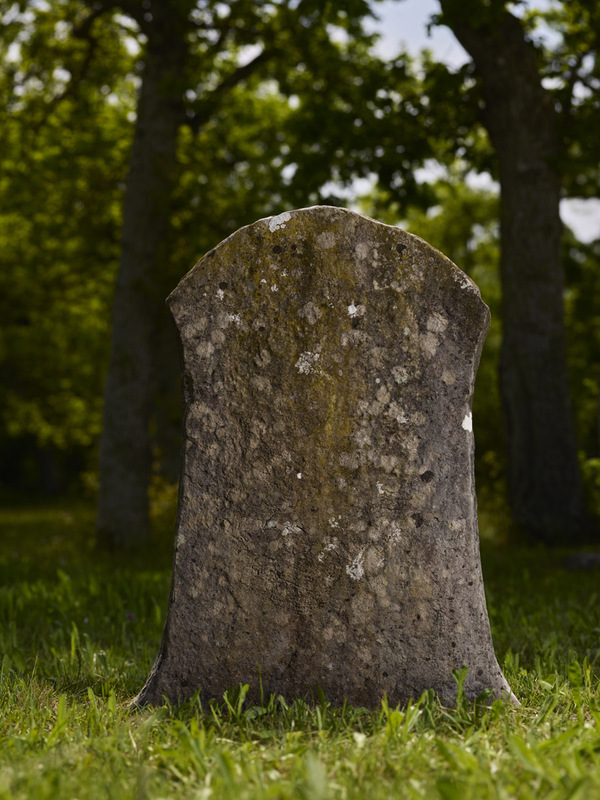
Measurements, Material and Condition The slab represents an entirely preserved picture stone including the root (see Sörling’s drawing in Lindqvist 1941/42 II, fig. 531), which, however, is not visible today but buried in the ground. “Limestone slab, 15 cm thick in the middle, 20 cm at the root. The obverse is quite flat, the narrow sides are convex, dressed and rounded towards the back, without chamfers. The reverse is rough. The stone’s total height is 105 cm, of which 80 cm are above the root. The width between the upper corners is 56 cm, at the narrowest place of the body, it is 50 cm, and 57 cm at the base” (ibid. p. 130). Apparently, in Lindqvist’s days the carvings were still discernible. Today, however, due to its placement in the open, the monument is much weathered, overgrown with lichens, and partly damaged. Some remains of the secondary paint can still be observed.
Description of Ornament and Images “Of the decoration, only indistinct remains can be distinguished, i.e., mainly portions of a roundel with a diameter of 33 cm containing a whorl motif” (Lindqvist 1941/42 II, p. 130). The roundel is simply carved into the stone and appears unfinished. The whorl consists of six crescent-shaped segments, which have never been chiseled. Lindqvist published a photo of the painted stone, which depicts large parts of the roundel (ibid. I, fig. 29; ATA 1718:39), as well as a drawing made by Olof Sörling, which does not depict any remains of the decoration (ibid. II, fig. 531).
Interpretation of the Imagery No interpretation
Type and Dating The whorl motif indicates an early-type dwarf stone, i.e., Type A according to Lindqvist’s typology, dating between AD 400 and 600. Lindqvist assigns the stone to his ʻBurstypusʼ (1941/42 I, p. 28), named after GP 53 Burs kyrka I. This type represents the group of Type A ʻdwarf stonesʼ with convex upper edge and decoration corresponding to the large Type A monuments, forming “miniature forms” of them (ibid. 31). According to Hauck’s typology (1983a, pp. 543–544), with the whorl as main motif, the dwarf stone from Tystebols belongs to the Havor-I-Typus (Typus IV). Nevertheless, the outline shape of the Tystebols stone, a strongly convex upper edge with pronounced corners protruding horizontally, indicates a Type B stone, dating between AD 500 and 700. Possibly, the monument should be regarded as a kind of hybrid and/or transitional form.  GP 53 Burs kyrka I
References Lindqvist 1941/42 I, fig. 29; II, p. 130, fig. 531; Guber 2011, p. 149 cat. no. 79.
Påträffades 1911 i Nyäng nordost om gården Tystebols.
Nuvarande lokalisering
Bunge Museum
Beskrivning
Helt bevarad tidig liten bildsten (period A), 105 cm lång och som bredast 57 cm. Idag är stenen vittrad och övervuxen av lav, men tidigare undersökningar visar att det fanns en stor virvel inristad på övre delen av stenen.
Datering
Dateringen oklar, men tillhör perioden 400-500-talen.
Tolkning
Ingen tolkning.
AA
TitleGP 374 Stenkyrka Tystebols I
Fornsök ID L1975:9235
RAÄ ID Bunge 146
Jan Peder Lamm ID 297
Lindqvist Title Stenkyrka, Tystebols I
Other ID Bungemuseet 945
Last modified Apr 23, 2026